The effect of container material on the amount of microplastics found in bottled water
Project Overview
This study investigated how container material influences microplastic concentration in bottled water, comparing plastic and glass packaging. Using controlled sampling, microscopy, and statistical testing, the research provided clear evidence that bottled water stored in plastic containers contained significantly higher levels of microplastic contamination than water stored in glass.
Motivation
Microplastics have emerged as a global health and environmental concern, with the World Health Organization reporting their presence in drinking water worldwide. Since bottled water is a common source of hydration, understanding how packaging choices contribute to microplastic exposure is critical for both consumer safety and sustainable industry practices.
Research Methodology
Sample Preparation: Distilled water was stored in both plastic and glass bottles for one week to simulate real-world conditions.
Instrumentation: A compound microscope (40x magnification) was used to identify and count microplastic particles.
Controlled Sampling: 25 mL water samples were extracted from each container, shaken prior to testing to ensure even distribution.
Data Collection: Microplastic counts were normalized by sample volume to calculate concentration per milliliter.
Statistical Validation: An f-test and t-test confirmed that observed differences between plastic and glass samples were statistically significant.
Key Insights
Plastic Contamination: Water stored in plastic bottles consistently showed higher microplastic concentrations.
Glass Advantage: Samples from glass containers often contained zero observable microplastics, confirming reduced contamination risk.
Statistical Evidence: The difference in mean concentrations was validated through rigorous statistical testing, confirming container material as a critical factor in contamination levels.
Significance & Why It Matters
This research provides quantitative evidence that packaging materials directly influence microplastic contamination in bottled water. The findings highlight the consumer health implications of prolonged microplastic exposure and underscore the role of packaging decisions in minimizing risk.
By approaching the problem through an engineering and materials science perspective, this study demonstrates how experimental design and statistical modeling can be applied to urgent environmental health challenges. Beyond bottled water, the results contribute to a broader conversation about sustainable packaging, regulatory standards, and biomaterials research.

Image of microplastics found in a sample taken from bottled water in a plastic container
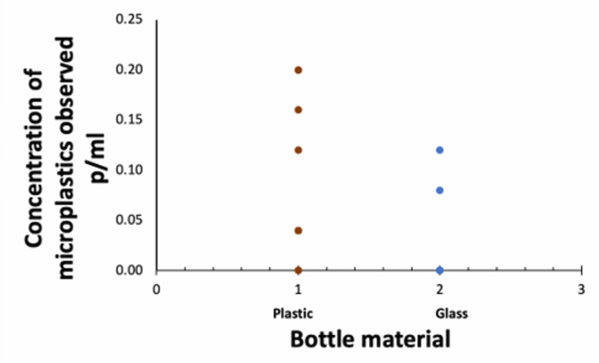
Concentration of microplastics observed in a twenty-five-milliliter sample of bottled water in plastic or glass containers